Showing posts with label The Wife of Baths Tale. Show all posts

Wednesday, April 8, 2015

Chaucer: Still a Misogynist, but Funny this Time

The Miller's Tale was a hilarious read, one which I thoroughly enjoyed. I take a certain amount of pleasure out of the humiliation of men, particularly those insistent on pursuing unrequited romantic or sexual interest, and Absolon's scatological demise (when "Nicholas anon let fle a fart" (3806)) was particularly amusing to my taste.
Butts are indeed the highest form of comedy.


However, to take a darker tone, there was a particular note that troubled me, and one that seems to form somewhat of a pattern in Chaucer's work: the vindication of the rapist. I discussed this at some length in a previous blog post, discussing the Wife of Bath's Tale. In that post, I used the protagonist's ultimate escape from any consequences (and essentially, his benefit) from having committed the violent crime of rape that served as the main conflict and driving plot force of the tale as part of my argument that the text fails to stand up to a critical feminist analysis.

While not involving the same (assumed) intensity of the rape in the Wife's Tale, the Miller's Tale is also heavily driven by a man committing an act of sexual assault, when Nicholas grabbed Alisoun "by the queynte," (3276) without consent and to her protestations. Again, not only does he not receive any sort of punishment for doing so (except arguably the hot poker from Absolon), but he is rewarded with fulfillment of his sexual aims. This pattern is alarming and certainly indicative of underlying misogyny in Chaucer, even as he attempts to subvert tropes rooted in it.
Get it?? ...because it's ROOTED in it??? ...no? anyone?... I'll show myself out.


The obvious counter-argument here is that this tale is not to be taken literally or seriously, as it's parody. This calls to my mind an infamous interview in which Slovenian cultural critic Slavoj Zizek is praising the film Kung Fu Panda.


Zizek interprets Kung Fu Panda as being effective because it parodies an ideology while simultaneously endorsing it wholeheartedly. I believe the Miller's Tale is a Kung Fu Panda - while parodying misogynist tropes of the era, it also endorses and rewards misogynist exertion of power. This is doubly effective - those who support this subjugation will enjoy its endorsement, and those who oppose it will enjoy the subversion. Both will implicitly support the text's patriarchal ideology.

Thinking on a larger scale, I find intrigue in Chaucer's use of the Kung Fu Panda ideological tactic simply because it's one I most strongly associate with the liberalism of the Enlightenment to the present, as it is a tool often used to obscure the ideological nature of content that supports hegemony within this framework. I don't know enough about the history of the Kung Fu Panda to evidence this, but I suspect that, similarly to things I discussed in my previous blog post, Chaucer is anticipating ideological components of liberalism and capitalism in a way that leaves him seeming, ironically, very forward-thinking (in the sense of dialectical progression of history) despite his misogynist tendencies.

Wednesday, March 25, 2015

Chaucer's Feminism Fails, Falters, Falls Flat

As I initially read the Wife of Bath's Tale, I found myself pretty pleasantly surprised with its ideological content. The moral of the story seemed to have a little more depth of social analysis than just "respect women," as seems to be the case in a good many romances. Indeed, the protagonist ultimately learns to give women agency and authority over their own lives and decisions. Given the pervasive conceptualization of the medieval as being more intensely patriarchal than modern society, I was shocked, as Chaucer's ethics seemed in line with the Feminist movements of the 20th and 21st centuries. However, I ultimately found his feminism fell a little flat.
http://i.imgur.com/DHgbhgv.jpg


The language used at the story's conclusion is telling: the knight's bride asks "Thanne have I gete of yow maistrye...Sin I may chese and governe as me lest?" To which he replies "Ye, certes, wyf." (1236-1238) This attempts to serve as the "empowering" high point of the story; the woman establishes agency over herself and the knight learns to respect it. The contradiction lies in the action itself occurring in the lines - she's asking for permission. This act contradicts Chaucer's thesis: her asking permission shows an utter lack of power, as it implies the ability of the knight to say no - to deny her agency. Furthermore, it implies infantilization of the woman, as needing a guiding (masculine) authority over her life. Agency that requires permission is false agency, and Chaucer disguises this under the guise of granting her autonomy.

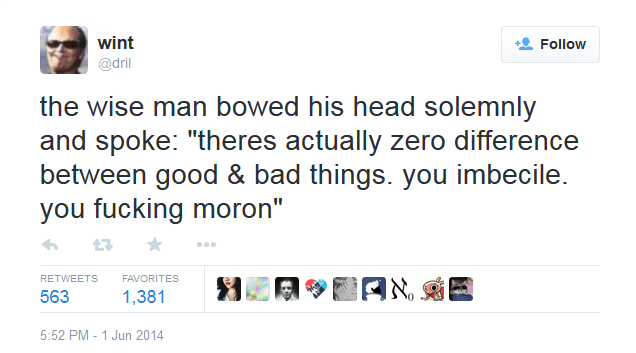
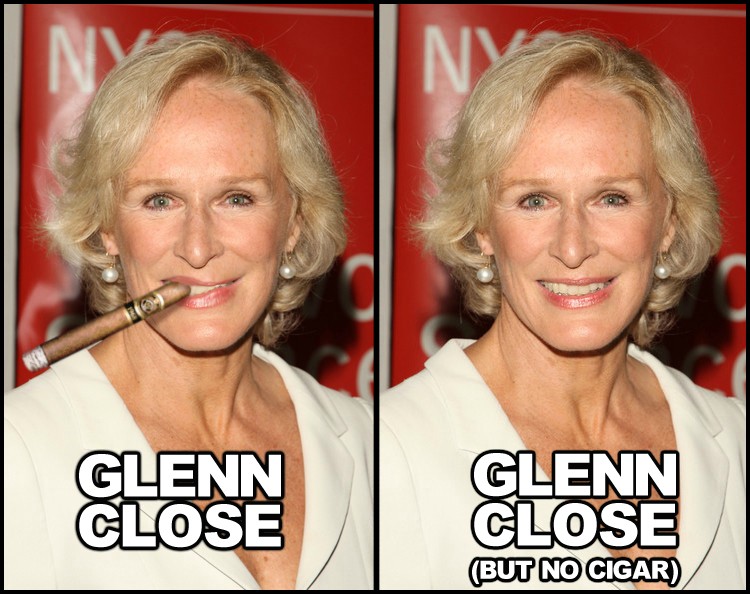
The knight thusly becomes the primary patriarch in the tale. The driving force of the narrative is his rape of a young maiden, an act which is presently and historically a very gendered crime, and an exertion and demonstration of power. The irony in this is that Chaucer, in his supposed feminism, never actually punishes the knight for his act. In fact, he ultimately ends up with a beautiful and loyal wife - he's ultimately better off than he began for having committed the act. The maiden is misogynistically thrust aside of the narrative. Ultimately, the only purpose of her being victim to such a horrible, traumatic experience is to help the knight learn to be a better person, which is unjustified - the good and bad are hardly equal here.

http://i.imgur.com/lSdxAlb.png?1

The primary woman of the story ends up serving a similar narrative purpose. She does it in such a severe way to foreshadow a modern literary trope - the Manic Pixie Dream Girl. This is a woman, often described as "quirky" or something similar, whose own motives end up being secondary to her helping a male protagonist become a better person - see: every John Green novel. Here, the "Pixie" aspect of the trope is taken literally: she is implied to be a fairy (Osborn, f.n. 18). This further reinforces her lack of agency by stripping her of humanity.

Ultimately, Chaucer serves an interesting role in that his proto-Feminist thought, while almost entirely upholding patriarchal structures, predicts several common tropes of modern liberal feminism - much of which didn't crop up until the revolutionary shift from feudalism to liberalism and capitalism was in full swing. I'll close with a quote, from someone I'm sure you're tired of hearing about:
Michel Fouc-oh, no, not again.

"Power is exercised rather than possessed; it is not the 'privilege', acquired or preserved, of the dominant class, but the overall effect of its strategic positions." (Discipline and Punish 26) Chaucer's downfall is the downfall of much of feminism - he fails to recognize that it's not enough for those in power to claim respect for the marginalized, because it does not change the effect of their position in structures of power or mystically grant 'agency' to the oppressed.