Showing posts with label Knight of the Cart. Show all posts

Tuesday, February 24, 2015

PMS?

So I was really confused about Guinevere’s behavior. When she first heard about Lancelot’s arrival and his fight, she asked the king to place her somewhere that allowed her to see everything. But the only thing she did while there was tell her maid his name and then tell him to stop (which lead to him being attacked again and she didn’t even care that it was her fault that he didn’t defend himself).

                And when she finally sees Lancelot, all beaten up from his trip over the sword bridge and his fight with Meleagant, she just brushes him off and says that he cannot please her.


And then she further insults him by saying that everything he did was worthless because she would only leave if Gawain came and got her. I mean, Lancelot just defeated the king’s son and is basically falling all over himself to please you and you’re just like “nope, go home”. Really?

 We don’t actually see any sign of her caring for him until after she hears that he died, had a full-on melt-down, claimed that everything she said was in jest and that he should have known that. So does that mean that they are close enough that they should know those kinds of things about each other? Because Lancelot implied earlier that he hadn’t really had her in any way, so they couldn’t be lovers before now, and Lancelot didn’t even have a clue about what she was thinking, so they couldn’t have been very good friends.

                It got even more confusing when she later told Lancelot that she rejected him because he hesitated for two steps before entering the cart. But when she was repenting before she said it was just a joke, so which is it?


                But hey, I guess it doesn’t really matter since they made up and had sex in the end.

Medieval Hercules at His Finest

 I really don’t mid this story that much, I actually sort of like it. Its got a lot of action a great adventure for a good cause, but the only part that was getting on my nerves was all the complaining from her and how much she’s all over the place with her relationships. One page she’s deeply in love with Lancelot, she sees him like and angel that fell from haven…. Then when he crossed that ultimate hard sword bridge he like thought about leaving and going back for like 2 seconds and bang right turn she hates him, doesn’t even want to be around him for awhile.

Of course later she falls for him again like he’s a modern Brad Pitt and he’s the man again.

This story kind of reminds me of Hercules. A strong man solder type person on a mission that everyone hates but secretly sort of resents, then he goes off and proves his worth and gains respect of all the people, becomes a hero and lastly has to go on a big mission that will save his lover, nut also put his life in danger. Hercules was always my favorite Disney movie growing up…. So maybe that’s why this one of my favorite stories we’ve read so far because they both have such similar story lines…. Almost to similar.

I don’t think it’s just Hercules that is similar to this story and Lancelot; to me I see a relationship with a lot of hero type books or movies. They are special, rejected at first, then people start to love them, then they find the love of their life, then they are put in a situation where they have to choose between their safety and the safety of others, you think they are going to fail then all of a sudden they save everyone and live happily ever after. 

An Over-dramatic Queen

When Lancelot makes it across the sword bridge to help the queen, she is excited at first, but she then refuses to see him. This is because she saw that Lancelot hesitated before getting into the cart, and she is mad that he actually thought about himself before deciding to continue on with his journey to rescue her. In my opinion, I would have just been happy that he came in the first place! Never mind his thoughts to give up. At least he decided to come rather than leave you in the other kingdom, right? It takes so much energy to be mad at someone you were excited to see, so I honestly just do not see the point in being angry. She's just being over-dramatic.


Alright, alright... she gets over it eventually, and then, she sleeps with him of all things! Where did that come from?! I mean, come on! Make up your mind lady! First you are happy, then you are mad, and now, you are in love with your husband's knight. This is all just a huge mess, and it breaks and follows some of the rules of courtly love, which does not help with the whole thing. Lancelot follows one of the courtly love rules (rule number fourteen) when he decides to get in the cart because his thoughts of turning back when the queen came to his mind. However, the queen broke rule number nine when she refuses to see Lancelot and is mad at him because she then goes back and falls all over him, madly in love.


I think that women are portrayed as over-dramatic far too often. I am not denying that we are over-dramatic, because we definitely can be, but so can men. My question is, why should the queen be so angry at Lancelot when he decided to come to her rescue despite the risk of losing his honor? I mean, what is the point/the big deal? So he hesitated. WHO CARES? IT WAS JUST FOR A SECOND!! Why can't the queen just be thankful he came in the first place?


I am a tad annoyed with her actions...can you tell? Sure it is just a story, and it is meant to be entertaining, but is all that drama and her little tantrum necessary? I think not.

Monday, February 23, 2015

SUPERMAN MADE A COMBACK!!!!

So, I swear Lancelot is like a medieval version of superman. He is so invincible, and he goes through all these fights and self-injuries and yet he can still jump up and be ready to do it all over again. He has to be a mutant or something to be able to bounce back from soooo many injuries.
            Then when Lancelot finally finds Guinevere she is happy for a little bit, then she gets upset because, she is a stalker, and watched him hesitate when he was getting into the cart for her. Then she gives him the cold shoulder and basically drives him away.
So he decides to go and try and find his friend Gawain, but then Guinevere calls him back and apologizes to him for being so cold to him. Then Lancelot breaks in to her tower later that night and then they spent a passionate night together. As he is breaking into her room he injures his hand and leaves blood all over Guinevere's sheets.
   
Lancelot then sneaks out of the tower before sunrise, and Meleagant (Crazy kidnapper) accuses Guinevere of committing adultery with Kay, because he is the only wounded knight nearby. Lancelot comes to the rescue and challenges Meleagant to a fight to defend Guinevere’s honor. Meleagant’s father interferes and convinces Meleagant and Lancelot to hold off their fight for a year. Over the year, Lancelot gets tricked by another dwarf and forced to be a prisoner, while Guinevere is allowed to return home. LIKE CANT THIS DUDE CATCH A BREAK?? 


 When the year is up he goes and fights, Lancelot bargains with his captors to let him go and fight, and that he promises to return. When he finally did fight Meleagant, Guinevere asks for him to lose to prove his love. He obliges and when he starts to lose, Guinevere changes her proposal, now hoping for him to win. Lancelot does what she wants and whoops Meleagant’s ass. If she really wanted him to say “I LOVE YOU,” SHE SHOULD HAVE JUST ASKED.
 
.But I can honestly say he thought he was looking fresh in that all red suit and horse matching to boot.

Love the story... but hate how it was told...

After now having read “The Knight of the Cart” in its entirety, I have to admit that the story has certainly grown on me. However with that being said, I also must confess that it took every bit of concentration I had to read until the end.

The main reason I had such a difficult time making my way through this particular tale was in large part due to Chretien’s writing style. Like I mentioned in one of my previous comments, the entire time I was reading I felt like there was a barrier between the story and myself and no matter how hard I tried I could not seem to bypass it. Every time I thought I understood what was going on a new event or twist in the plot would prove me wrong (such as when Lancelot gets “deceived” by the dwarf on pg. 232). Usually I am intrigued by plot twists, as they work to build tension and suspense, but in this case I was simply left confused and wondering what was going on in Chretien’s mind when he wrote this story.

It was quite a challenge for me to follow the main plot of the story all the way through to the end, as I couldn’t quite shake the feeling that what I was reading was simply a bunch of random / invented events all strung together in order to craft a complicated tale. I almost feel as though there were so many things going on that I couldn’t become overly invested in the story itself because I was too busy / distracted by trying to keep all of its parts straight! Now don’t get me wrong, there were definitely a few moments throughout that I did have the pleasure of being able to connect with and enjoy, such as when Meleagant finally met his doom on pg. 256 or when Guinevere had to restrain herself from embracing Lancelot too openly in front of Arthur’s court on pg. 253. However on the whole this story left me feeling very incomplete; as if I even though I had read the entire thing I was still an outsider looking in who didn’t quite get it. (Of course this is true to a certain degree, as I am not the original audience this tale was intended for, yet I believe that there is more to it than that.)


Overall I have come to the conclusion that Chretien’s writing style drastically affected my ability to relate to, enjoy and become invested in his story. Not only was it difficult for me to follow the plot in general thanks to the many twists and turns the tale took before its conclusion, but the questionable intelligence of Chretien’s characters (hello, can we talk about that dwarf / how daft Lancelot is for a moment?!) significantly turned me off thanks to the many distracting questions their decisions raised in my mind. The only character whose actions I never questioned was Meleagant, as it was always very clear to me why he acted the way he did, however in general I often found myself wondering what the hell everyone was thinking. I know that by reading this tale over a few more times its charm would only increase (since I did find it easier to read through the second half than I did the first), yet the overcomplicated and cumbersome style of Chretien’s writing doesn’t make that task seem too appealing…

A Guide To Making Adultery Acceptable-- Warning: High Failure Rate If Not Set in a MedRom

What’s the deal with the adultery in this story? Unless I am misunderstanding or missed a part, his love, honor, and loyalty to Guinevere seems to pardon that whole part of the story. Well, they are caught because he bleeds on her bed; however, I feel like Chretien wants us to forgive him because his devotion is so romantic. After some sexy time…..


Chretien reveals a tortured Lancelot:

“But the day’s approach pained him deeply since he had to rise from his beloved’s side. Rising made him feel like a martyr, for he suffered the agony of martyrdom in the torture of departure…”

Hey, Chretien, you didn’t throw me off track! I still realize there’s adultery going on here! But, I guess in the art of courtly love, marriage is squashed by real love.

No, but really, I do understand that Lancelot as a character is revealed through this affair. Without his love for Guinevere, he would probably be just another knight and boring to follow. It is through her that we see how chivalrous he is. His initial push to go on this crazy journey was to rescue her. I guess it is sweet that he does everything for her… like do his worst… In response to her request to fight horribly in a tournament, Lancelot says, “Since this is her command, I am grateful to her” (241).
Really…?? Let’s not forget that he shamed himself riding in a cart and has a bajillion wounds from this quest to rescue her. I promise that I am not a person jaded by romance.
From our last class discussion, many of us wondered why the knights were not named… specifically, why Lancelot was referred to as “the knight”. In my opinion, this story is about how a woman can complete a man. His and her love is so strong that they are always associated with one another; therefore, his identity is not important without her. Since she is missing in the first half of the story, he is just a knight on a journey.


I really want to know how others feel about Guinevere. I mean, she seems like she wears the pants in their relationship. At the same time, I think she is stuck in a loveless marriage. I feel bad for her at times, but she sure does act like a spoiled little girl. I mean, come on… okay, he didn’t go into the cart right away? He hesitated? The man ended up riding in the cart, give him a break!

Meleagent the Evil-Doer!

I have to love this guy because he is the essence of our modern villain. Shows up to a party, steals a queen, then tries killing the hero in the end? Perfect character trope in the making! You can almost imagine Meleagent’s armor is black and red whereas Lancelot’s is blue and silver. The best Darth Vader ever did was kidnap his own princess daughter and try killing his son (and no, Tarkin was the one to destroy Alderaan so Vader can’t even put that on his resumĂ©). Nevertheless, child abuse is evil, too, but far less classy than party crashing.

Plus, I like pretending his name is secretly an old French pun for "evil-doer." See, the stem "mal," means evil, and "agent" is someone who does something.

Like many hated villains, he has an older, wiser advisor. And like the most evil of those villains, that advisor is his dad. Even he wants Meleagent to chill before he gets his ass handed to his angsty self by our knight in shining armor. Our evil-doer is starting to seem less like Vader and more like whiny Anakin.

George Lucas is the real villain.

So like civilized nobles the hero and villain decide to resolve their conflict by murdering each other! Standard procedure, villain loses his arm gets punched in face. Yet it’s not very gratifying. And that bugged me! He’s evil but we don’t get the full impact of hating him like Lancelot hates him. It's because we don't get a good reason to hate him because we only see him as an actual actor nearing the end. That’s way too late to start a compelling relationship between character and audience.


Still, Meleagent lives up to his villain status in the end by basically yelling, “I’ll get you for this!” Too bad he can't keep his head to deliver said revenge. He would’ve won if he were better armed.

Me laughing at my own dumb puns.

Love Thy Lover With All Thy Heart and Soul and . . . Wait, What?


            One of the most interesting things about “The Knight of the Cart” is the way it approaches piety and faith. As per the norm, characters interact with each other in a deeply Christian age, but ChrĂ©tien de Troyes creates a land where faith means different things to different people. The knights in particular approach faith in a different way.
            Lancelot has a shaky manifestation of his faith in God. He starts off fairly merciful and noble, sparing the life of the knight at the ford: “‘I have always shown mercy to anyone . . . if he seeks mercy in the name of God. I do this in God’s name, as is right’” (ChrĂ©tien 181). Mercy is one of the core Christian virtues, so Lancelot seems pretty solid in his faith. Things soon change when he beheads the knight who interrupts his meal. That knight also asks for mercy in God’s name, but Lancelot instead sides with “Generosity” and gives the head to a passing maiden who asks for it.


The “dueling virtues” of Generosity and Pity seem pretty strong as ChrĂ©tien portrays them, but that is an argument people (myself included) have been using for ages to justify doing something wrong. While Lancelot doesn’t abandon his Christian nature, he certainly diminishes it after losing his mercy.
            Rather than focusing on God, Lancelot spends most of the story fixated on the queen, who, it becomes evident, is an empowering force. One of the biggest examples is when Lancelot breaks open a barred window: “‘I believe these bars to be useless. Only you may prevent me from reaching you. If you grant me permission, [my lady,] my way is clear’” (ChrĂ©tien 226). The instance’s significance comes from its resemblance to water-walking miracle from the Bible. Jesus walks across the Sea of Galilee to meet the disciples. Peter responds much like Lancelot does: “And Peter answered Him and said, ‘Lord, if it is You, command me to come to You on the water’” (Matt. 14.28). Clearly, faith is a force that empowers humans to greatness, but in “The Knight of the Cart,” Love is also a force that empowers greatness. It seems like Lancelot puts his love for the queen before his love for God, which is a no-no in traditional Christianity.
            So, I’ve been wondering, can a lover in courtly romance truly be dedicated to his faith? What does it mean to be faithful? Is love greater than faith? I don’t know, but it doesn’t seem like the infatuation of courtly love and faith coexist fairly well; however, ChrĂ©tien de Troyes would probably disagree.

***

Additional Works Cited
The New King James Bible. Nashville: Thomas Nelson Publishers, 1982. Print.
 

Thursday, February 19, 2015

Chrétien de Tr-Oh, yes! & Michel Fouc-Oh, no!

“My most recent reading for fun was the first twenty pages of Discipline and Punish by Michel Foucault, after which I gave up.” - Me, on the first day of class.

This class is taking on a strange cyclical nature for me - upon reading “The Knight of the Cart” I was instantly reminded of what little Foucault I had read. What served as a point of interest to me in particular was the punishment itself - the titular cart - which serves a peculiar analytical position when studied through the lens of Foucault’s explanation of history.

Strap yourselves in, this is gonna be dense.

Discipline and Punish studies the historical shift between feudal penal structures (which it argues to be public and focused on the body) and later capitalistic ones (which it argues to be more private and focused on the “soul”). The punishment of the cart was perplexing to me because it seemed to contradict Foucault’s thesis - while, like Foucault predicts, it was very public, its description in the text seems to indicate a greater focus on the soul, saying “Thus he [the condemned] had lost all honor.” With further thought, I realized something crucial about feudal society, which I believe is key to understanding several of the texts we’ve read thus far: the body and soul were not considered separate ontological entities, as we know them today, at the time. This punishment of the “soul” (through the emotion of shame) here has direct consequences, not just spiritually, but materially, through the system of honor in place at the time. ChrĂ©tien alludes to this: “From then on all courts refused him hearing”. The significance is difficult to understand through our modern capitalist lens, but at the time, this was a very severe material penalty, that had intense physical consequences to the body of the condemned - he would likely be doomed to a life of poverty and solitude, potentially ending in starvation or similar death. For the knight, labor in service of a court was the only option - its denial would lead to death. The punishment of the “soul” here is not coherently differentiable from the material punishment of the body.

Phew!

So ultimately, this long-winded mess has led to the conclusion that medieval ontologies lacked the distinction between body and soul as separate entities that modern constructions have. I am positive that this can be applied to other texts that we’ve read as an interesting perspective and mode of analysis. I, however, will draw upon my roots as a math major: “This is left as an exercise to the reader.”

Tuesday, February 17, 2015

Does anyone else understand this story? Because I don't

Thankfully, this story wasn’t as heavy with details as Erec and Enide was, but for some reason I still had problems with it. To me, it seemed like just a jumbled mess of random events punctuated with action scenes. It was made even more confusing by ChrĂ©tien’s refusal to use a name other than “knight’ for anyone.

One of the first things that I found weird was on page 171 when the knight came in and basically said “hey king, I have a bunch of your people imprisoned and there ain’t nothing you can do about it”. Then the king just kind of went “eh” and went on his merry way. But then Kay heard about this and came up with some manipulative scheme that just ended with him disappearing and the queen being captured. God damn it Kay.

Another scene that was particularly confusing was when the knight of the cart attempted to cross the ford and had to fight the guard on page 179. Neither of the knights were given proper names and ChrĂ©tien kept switching between “knight” and “guard” for the man who was guarding the river while still calling the knight of the cart “knight”. At times it almost seemed like there were three men there and I could never tell who had the advantage.

Which reminds me, what is with this knight and his spacing out? He was so out of it that he couldn’t hear the guard until he was physically thrown from his saddle? Was he high or something? I mean, I know he was thinking about a woman, but really.

And then there was the whole thing about the cursed bed that couldn’t be slept on. The woman was nice enough to take them in when they were supposedly disgraced from riding in the cart, and how does the knight of the cart repay her? By telling her that her rules are stupid and then sleeps in the bed anyway. And if he was able to chuck the flaming lance away and put out the fires without even getting out of bed, then why was the bed so dangerous in the first place? He seemed to have no trouble with it.


Gah, I just don’t know anymore. Now I’m really looking forward to the discussion because I want to find out what the heck was supposed to be going on in this story. 

The Knight of the Cart...a Disgrace??

In this story, I've come to the realization that Chretien is not particularly fond of dwarves. Why he makes them out to be so horrible, I have no idea, but this brings me to the cart that the dwarf had.

Why is it such a big deal that the knight rode in the cart? The knight got into the cart so that they could learn what happened to their queen. Is that not honorable in itself?! I know the story is kind of vague at times (especially with characters), but why is riding in a cart so horrible? Why should that even matter, especially when he did it for his queen?

Another thing that I want to bring up is the bed that they are supposedly too undeserving to sleep in. What does this bed symbolize, assuming it is of importance? I'm not sure exactly was going on in this part of the story. There was something about fire and a lance, I think. It was a little hard for me to follow.


Overall, I was somewhat confused by this story. Yes, it was interesting, but it was vague and jumped around at times, which made it hard to follow.

Monday, February 16, 2015

Am I still dreaming?


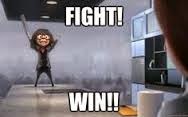
Throughout the reading, all I kept thinking of was two quotes from the movie Inception (see images below). 
 
We start the story with a great gathering of King Arthur and his many subjects at a glorious gathering planned by a guy named Kay.  Now for the dream parts… a knight suddenly confronts Arthur gloating how he has a bunch of Arthur’s subjects and ‘nyah, nyah, nyah-nyah, nyah’ he isn’t giving them back, as he leaves he further challenges Arthur implying ‘Your queen too, I want her as well [crude cough]. Send your best man (does not need to be the one from your wedding) with the queen, we fight, and I win and [perverted tongue action and sounds] the queen is now mine and on the off chance your man wins [whimsically spoken], you get your people back. [Thinks for a brief moment] Yea, that’s a great bargain for you, one for many should you win… Bye!’  And he leaves.  So we start at a great gathering… how did we get here again?  Then some unknown knight makes a challenge and one of your best men want to leave… if this is not strange, I am not sure what is.  Continuing on, the Kay-guy, with Queen in tow, ventures after the strange knight.  Arthur and his men pack up and chase after Kay who is chasing after the knight.  Enough with summing up the sequence of events at this point and getting more to why all of this is a dream (based on my two pictures’ quotes):

1)      Kay is not mentioned or included in the story once his horse is spotted for at least another 20 pages.

2)      Sir Gawain gets ahead of everyone else who is also trying to follow Kay and are also dropped from the story without proper explanation for quite some time.

3)      Sir Gawain, on his pursuit comes across a knight who has a over-worked and soon to be dead horse and without inquiring any details or further information (about the knights’ circumstances or Gawain’s own quest or anything), just gives the knight one of his horses.

4)      The horse is dead moments later and Gawain follows the ‘Cart of Shame’ (the human version of a dog’s ‘Cone of Shame’) which the knight chose to travel in and, again, does not inquire into what happened.  I mean the knight’s injured and sweaty, his horse died, your horse that you lent him died, and you’re neither injured nor sweaty… ask some questions about what happened!!

By the point that the knight’s ‘outstanding’ bed catches fire and a blade just barely cuts him, I gave up in trying to understand why all these things were happening and just came to the conclusion, ‘it’s all a dream!  Nothing is real!’  Correct me if I am wrong, but is not the whole story one strange occurrence after another?  If it is all a dream, who is the dreamer?  The narrator saying that they were asked to compose the story for someone they had feelings for, or someone dreaming of the narrator that exists in the story that the narrator is proposing? 
 
Confused?... Feel like Dr. Mario (above) put you on some trippy drug?  Well, you aren't alone!  Yet, at the same time, some of best memories have occurred from moments like in the story, where my friends and I acted and did things in the spur of the moment, making decision after decision with no fore-thought.  Whether the story is a reality of spurs or a dream, I leave up to you to make your own opinion… but I am going with dream!

Many Knights, Dwarfs and Love??

 
        Okay so first thing, why are Dwarfs so bad? In this story and in Erec and Enide they describe Dwarfs as being these horrible, rude and despicable creatures. I always thought dwarfs as being cute and adorable like the one in Snow White. Like Dopy, he was ADORABLE!!

 I just wanted to grab him and hug him ohh soooo much. Sorry about my little rant about how adorable dopy is... like seriously when I was younger all I wanted to do is pinch his cheeks. Kind of like what those weird grandmas do even though you’re a grown adult. Smh I am getting off track….back to the task at hand. Like I was saying Chretien de Troyes loves to use dwarfs I just think they are cute not as grotesque as he portrays them.
 
        Another thing I did not understand was why is it so HORRIBLE to have a cart? I would think it would be I don’t know…. Helpful!!... I know that if I was on a long   journey I would not mind having a cart. I would be able to hold all of my belongings. Even though when I think of it, having a cart would kind of make it easier for someone to rob me. Maybe having a cart is a bad thing because it shows weakness and shows robbers how easy it is for them to rob the cart owner. I have no idea!


        Another thing I want to rant about is why Chretien de Troyes never gives appropriate names for his characters. He never differentiated between all the knights in his story. The only knights I can keep track of are "the knight of the cart" a.k.a Sir Lancelot and Sir Gawain. Their journeys are so complicated and confusing. It seriously makes my head spin kind of like a twister.
        The sword bridge annoyed me. They talk about how dangerous and treacherous the bridge was and how no one has ever been able to cross it. It’s like this ominous being. It takes Lancelot forever to get to the bridge but then when he gets there in like 2 seconds he crosses the bridge with ease although he got injured but it felt like a major let down after all this work building up how scary and ominous the bridge is.