Showing posts with label ArtofCourtlyLove. Show all posts

Monday, February 23, 2015

A Guide To Making Adultery Acceptable-- Warning: High Failure Rate If Not Set in a MedRom

What’s the deal with the adultery in this story? Unless I am misunderstanding or missed a part, his love, honor, and loyalty to Guinevere seems to pardon that whole part of the story. Well, they are caught because he bleeds on her bed; however, I feel like Chretien wants us to forgive him because his devotion is so romantic. After some sexy time…..


Chretien reveals a tortured Lancelot:

“But the day’s approach pained him deeply since he had to rise from his beloved’s side. Rising made him feel like a martyr, for he suffered the agony of martyrdom in the torture of departure…”

Hey, Chretien, you didn’t throw me off track! I still realize there’s adultery going on here! But, I guess in the art of courtly love, marriage is squashed by real love.

No, but really, I do understand that Lancelot as a character is revealed through this affair. Without his love for Guinevere, he would probably be just another knight and boring to follow. It is through her that we see how chivalrous he is. His initial push to go on this crazy journey was to rescue her. I guess it is sweet that he does everything for her… like do his worst… In response to her request to fight horribly in a tournament, Lancelot says, “Since this is her command, I am grateful to her” (241).
Really…?? Let’s not forget that he shamed himself riding in a cart and has a bajillion wounds from this quest to rescue her. I promise that I am not a person jaded by romance.
From our last class discussion, many of us wondered why the knights were not named… specifically, why Lancelot was referred to as “the knight”. In my opinion, this story is about how a woman can complete a man. His and her love is so strong that they are always associated with one another; therefore, his identity is not important without her. Since she is missing in the first half of the story, he is just a knight on a journey.


I really want to know how others feel about Guinevere. I mean, she seems like she wears the pants in their relationship. At the same time, I think she is stuck in a loveless marriage. I feel bad for her at times, but she sure does act like a spoiled little girl. I mean, come on… okay, he didn’t go into the cart right away? He hesitated? The man ended up riding in the cart, give him a break!

Monday, January 26, 2015

The Steamy Beach Read Including Prejudice and Creepiness


After two paragraphs of Capellanus’, The Art of Courtly Love, I felt like I just read the classification of a stalker. The examples of what torments a man before “love becomes equally balanced on both sides” (Capellanus, 30) are obsessive and superficial. One fear made me shake my head more than the others: “[I]f he is rich, he fears that his parsimony in the past may stand in his way” (Capellanus, 30). The ugly man and the poor man’s fears are valid but superficial; however, the rich man’s seems like an obsessive person purposely creating reasons to torment himself.

The rest of the book implicates how the rules of courtly love are distasteful and delusional. First, courtly love appears to be homophobic: “Whatever nature forbids, love is ashamed to accept” (Capellanus, 32). I instantly thought that according to the rules of courtly love, a man raping a woman will shame love less than a homosexual couple. Then, love has an age criteria. While men have a minimum age requirement, women have a cut off age. The ages fall into the age ranges for procreation. While I think there should be a minimum age to fully understand love, a woman is capable of having a passionate relationship after the age of fifty. The book ends with the story of the knight and his British lady. It is in the style of a bad role-playing game with ridiculous quests for reciprocated love. By the end of the story, King of Love proclaims the thirty-one rules of courtly love. The thirty-one rules support adultery and obsession, and they are mainly based on superficial grounds. My favorite one could possibly kill a person: “He whom the thought of love vexes eats and sleeps very little” (185).


Courtly love stories appealed to the rich, who were literate and could afford leisurely activities. Many wealthy couples were married based on status rather than attraction or love; therefore, many unhappy marriages existed. The story in Capellanus’ book illustrates a woman able to persuade a man to do anything to please her. This tells me that the tales of courtly love were written mainly for a female audience. The audience is not interested in reading stories similar to their own mundane marriages. Instead, they are interested in indulging in stories about a fantasy life within social acceptance. This is why the love is never between homosexuals and the main characters are within the higher social classes (lady and knight). What more could a woman want than a man tormenting himself until he is willing to do anything for his lady love? Who wants to read a story about a man wooing an old lady?


Courtly love stories seem comparable to the romantic steamy beach reads with a twist of prejudice and obsession.


The Art of Clingy Love

Well, I mean I guess you can't hold the homophobia against the guy since it's such an old essay, but it's a little off-putting to see that whole passage about how love cannot exist between people of the same sex right at the start of the list. The first couple of pages had me agreeable, thinking "wow some things never change, we've all been there, who doesn't know what it's like to be stressed out about a crush, what a unifying theme we've found in humanity," and then that ends and he's like "but seriously, if you're gay just get out now."

After the absurd trials overcome by the Briton in quest of the scroll of elegantly-written bullshit, we receive the terrifying list of things we all must adhere to if our love is to be deemed true. If these rules were to be taken seriously, I would have to report that I have never been in love, and I sincerely hope nobody else ever has either.


Scooby Doo took a dip in ratings after this episode.


A good chunk of the rules have to do with thinking of your beloved all the time. True love has to be the reason behind every thought and action. Rule XXX mentions that you must be "constantly and without intermissionthinking about your lover. If you even look at anybody else, you're not truly in love. If you read someone else's blogs, you aren't truly in love. If you're reading this right now and you're dating someone else, you're cheating on them with me, right now. Please stop, you're terrible.

Apparently you're also supposed to have your heart skip a beat every time you see your lover, and turn pale. If you've become comfortable around your significant other, you've fallen out of love, and it's never coming back. So if you spend too much time around your beloved, you'll develop heart palpitations, dizziness, fatigue, loss of appetite, etc. People should not be in love if they are pregnant or may become pregnant. Consult your doctor before falling in love.


A very healthy love, judging by their skin color.


There's definitely a point to some of the rules, but they seem to be mostly common sense. One rule dictates that love is worth more if it's harder to earn, which is true of pretty much everything, all the time. Rarity = value. Something that everybody can get isn't worth anything because they don't need your help getting it. So, basically, don't be a slut.


You can read this whole guide and try to value your relationship, or you can follow my personal guide to love that I've created just now and specifically for use in this blog:


AJ's Guide to Love: How In Love Are You?


Do you need to read a list of rules to determine if your love is true?

                                Yes?                                                                                 No?
                                  
                             It's not.                                                                        Good start.


Amus on, “The Art of Courtly Love”

As I began to contemplate this reading, I skimmed through it and thought, “Nine pages? I can do it”. For the record, I’m not so much into reading for pleasure or just reading period. As I started reading the first chapter, I began to jot down some interesting findings.

A major shock that stood out to me was the first sentence of this reading. “Beauty of the opposite sex,” (Capellanus, 28). Love isn't all about beauty or sex, nor is it only based on the opposite sex. Also, that the same sex is “not fitted for giving each other the exchange of love” (Capellanus, 30). Totally disagree, it can ultimately happen! In our society today, there’s a major debate on same sex-marriage, which I find nothing wrong. Love is held within ourselves and our special someone.
http://merchantsmarketer.com/irs-recognizes-same-sex-marriages-for-tax-returns/
As stated throughout this first chapter, “love is suffering.” People, myself included (no shame!), are scared of what love may hold. What is “single love?” As described in this reading, I immediately thought of cheating and insecurities. I thought to myself, and really agreed that it is a reflection of the mind. The woman has all the power in this court of love; therefore, the men are the ones who are in fear. This is a plus for us females because in the past we didn't have much power as do men.

Now, is money really the answer to love? Or is it what we call, Lust? Yes, love has its ups and down, and can solely be based on wealth. Apparently love increases with wealth, and love decreases with poverty. “Poverty has nothing with which to feed its love” (Capellanus, 30). I totally disagree; we don’t need money to fall in love!

http://www.thefix.com/content/drinking-him?page=all
Amor or Amus? As do fishermen’s, we allure one another into our hook of love! So cheesy, yet so clever.
RULES. RULES. RULES! Does love really have to come with rules? Rules can definitely be strict and precise, but yet awkward. One rule that stood out to me was number 33, which states, “A true lover is constantly and without intermission possessed by the thought of his beloved” (Capellanus, 186). I mean, I understand you’re in love, but the constant thought? That’s a little excessive. Rules are rules, and some may come in handy. Capellanus mentions that men are compared to shameless dogs; they lust for every woman they see. In some cases, he can be right, but not exactly.


Work Cited:

Capellanus, Andrew. "The Art of Courtly Love." New York: Columbia University Press. 1960.
            Print.
Schwartz, Debra. "Backgrounds to Romance: 'Courtly Love.'"California Polytechnic University.
            1998-2002. Web
Thompson, Diane. "Courtly Love Study Guide." Northern Virginia Community College.

 January 26, 2011. Web.

Sunday, January 25, 2015

Maybe the First and Greatest Love Wasn't Courtly


      As a satire, Andreas Capellanus' The Art of Courtly Love manages to make fun of or tick off pretty much everybody. And here I thought Jonathan Swift was good, but his plan to cannibalize the orphans doesn’t quite measure up to Capellanus’ work. The book’s tongue-in-cheek approach to love kind of mocks the courtiers who swooned (if there was dramatic swooning in the twelfth century) at the idea of a passionate, loving knight in shining armor. Of course, Capellanus probably didn't totally ridicule the idea; I imagine he believed in love between people as well, being that he was a cleric and all.

Eleanor of Aquitaine is not amused.


To make things better, the book is riddled with inside-inside jokes that would have made medieval busybodies seethe with rage. There are numerous subtle twists of Christian doctrine that only a literate person who had read the Bible, essentially only priests and monks (and not even all of them), would understand. Here are a few examples:

1a. “[Love] can endow a man even of the humblest birth with nobility of character; it blesses the proud with humility” (Capellanus 31).
1b.“[The redeemed are] children of God, and if children, then heirs—heirs of God and joint heirs with Christ” (Romans 8:16b-17a). And that “‘the last will be first, and the first last’” (Matthew 20:16).
2a. “A true lover considers nothing good except what he thinks will please his beloved” (Capellanus 185).
2b.“Test all things; hold fast what is good” (1 Thessalonians 5:21). And “'he who does the will of My Father in heaven [shall be saved]'” (Matthew 7:21, which relates to pleasing God). And “He who is unmarried cares for the things of the Lord—how he may please the Lord” (1 Corinthians 7:32).

Not to mention that Capellanus advocates extramarital relationships, a strict taboo in Christian doctrine. I imagine some priests were in stitches as they read The Art of Courtly Love.

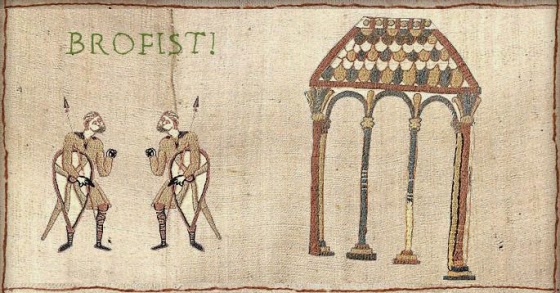
Medieval Fist Bump!


Others might have said, “Andy, my man, we like you, but you took it a bit too far, don’t you think?” That might be why he wrote a third book recanting the first two satires…
            Yet is it possible that Capellanus believed that love was truly powerful, even as he poked fun at courtly love? Perhaps he satirized courtly love in order to differentiate it as a corruption of the love inspired by God. After all, this was a man whose doctrine stated the greatest two commandments were to love God and to love one’s neighbor (Matthew 22). His satire implies that love has a truly divine quality, although courtly love does not. As some historians have pointed out, it is possible The Art of Courtly Love was meant to encourage knights to behave well (Schwartz), but could it have also been meant as a not-so-gentle way to encourage all courtiers to remember God as their first love?
            If so, maybe the priests were right to give him that fist bump after all…