Showing posts with label Team Lancelot. Show all posts

Monday, April 13, 2015

Emare: A Girl who goes Through

 The story of Emare is one for the books. This story was so odd that it was very good. Emare was a bright and beautiful girl. After her mother dies , her own father seeks out to marry her because she has grown into such a beautiful woman. Now that's a twist right there. I believe that this is the first time where the king is not only a pedophile but this is incest! Its kind of creepy that he falls in love with his own daughter! But thank the Lord she has a brain and refuses the proposal but, the king gets in his feelings and sends her adrift on a boat! Somebody is mad because that they didn't get the person they so called "loved".


Mother in- Laws can be so evil sometimes. After the wedding of Emare to the king of the island she washed up on and also the birth of her son, the king leaves and Emare is left in the hands of his men to be protected. Now the king sends a letter to remind his men to keep watch over her, but his own MOTHER gets the letter and responds to him with lies. His mother already thinks that she's the devil. But then again most mother of sons thinks that nobody is good enough for their own son. She writes her son that Emare gave birth to a monster and now Emare and her baby is set adrift again!! Why couldn't the mother just mind her own business! Because of her interference she has put Emare through another trip and even though she was caught by her son, I believe that she feels no regret in doing what she did.


 Emare has lived a life of travels in this story. But never once she really complained or sought out revenge against the evil mother of her husband. She was reunited with her husband after he waited and cried for seven years to finally go after her. But family is family and she also reunites with her father and they live happily ever after. I am glad that even after all that Emare goes through she still has a happy ending with her son, husband, and father as one big happy family.

Emaré and The Man of Law's Tale

The story of Emaré and her perilous journeys across the sea caught me incredibly off guard this week and in the best possible way! Even though I never saw it coming, this piece turned out to be my absolute favorite read of the semester thus far and I couldn’t be more thrilled about it!

The main reason for my excitement is due to the fact that my previously unresolved feelings towards the “Castaway Queen romances” (Osborn 128), such as Chaucer’s The Man of Law’s Tale, have become clarified and somewhat elevated with my reading of this version of the story. Before Emaré, I had only encountered this type of tale once, in The Man of Law’s Tale, and even though I generally enjoyed reading the story of Custance, I found myself puzzled when arriving at its conclusion. The highly unrealistic elements of the plot (such as Custance surviving alone in a ship that safely makes it all the way from Northumbria to Rome, for instance) threw my head for a loop and I had a great deal of difficulty in resolving my feelings about them. Was I supposed to believe that something like this actually happened? No, as it is clearly impossible. But then how much of my disbelief should I suspend in order to fully appreciate the story? How much of this tale – if any – did Chaucer’s original audience relate back to real life situations?

The Man of Law's Tale by Anne Anderson

Questions like this prevented me from fully connecting with the story and they continued to rattle around in my head for a long time after I tucked The Man of Law’s Tale away. However very much to my surprise, while reading Emaré this week absolutely none of them resurfaced! Considering the stark similarities between the two tales, I was shocked to see the vast difference in experience that I had while reading. Instead of focusing on the individual events and elements of the plot within Emaré, I realized that, since I already had a general idea of how the story would play out, it was much easier to consider the work as a whole. As such I didn’t stop to ask myself what was going on or if I should believe every little detail. Instead I just went with it, sat back and enjoyed the elements of the tale that I hadn’t found in Chaucer’s version of the story, such as the bejeweled dress.


Having Chaucer’s work sitting in the back of my mind while reading Emaré was a huge advantage and by understanding the type of story that I was confronting (as opposed to when I first read The Man of Law’s Tale and had never experienced that type of story before) I was able to drastically increase my enjoyment of the work.  


Source:
Osborn, Marijane. Nine Medieval Romances of Magic. Peterborough, Ont.: Broadview, 2010. Print.

Monday, March 30, 2015

Knightly Taste Aversion … Is There an End in Sight?

The first time I was introduced to Chaucer’s The Knight’s Tale (as I suspect is true for most) was in a high school English class. Even though I have fond, fond memories of the two days I spent watching Heath Ledger parade around a fictional medieval world with perfectly tousled hair and sexy, shiny armor… I can’t remember one interesting piece of information from our class’ actual discussion of the tale itself. The only thing I do remember (save for Heath’s lovely smile) is the lasting sour taste the story of Arcite and Palamon left behind in my mind.


The ‘taste aversion’ to The Knight’s Tale that I began to develop in high school (much to my dismay) only grew stronger over the following years as I subsequently encountered the text again and again. Try as I might to connect with the story, there was always some aspect of it that simply put me off. The most glaring example is of course the character of Emelye, who has basically no say (except for her ability to pray) or choice in the matters that directly affect her life. Although I understand that this is due to the social structure of the medieval world... it is still enraging as a modern female reader to encounter a story where the women are depicted as such. In all reality, this is probably the number one reason why I have such an aversion to the character of the Knight and to his tale (although there are many other reasons as well). Even though I do value the tale a great deal on the whole, the fact remains that I simply do not enjoy reading it. Or at least that was what I thought.

After being faced with the reality of having to read The Knight’s Tale yet again, I decided that, even though I had officially filed the story away into my ‘unpleasant reads’ folder (or to borrow a term from Sherlock and the ancient Greeks, my mind palace), I would try as much as possible to resurrect it and remain open to new insights. Although the tale isn’t my favorite choice, I was determined to find something about it that I had previously overlooked to like. Thankfully, I succeeded.


Although it may seem a bit dark, re-reading the tale and paying closer attention to the prayer’s of Emelye, Palamon and Arcite helped me to better understand (and take a bit of pleasure in) the latter’s death. In previous readings of the tale Arcite’s death puzzled me and I have never quite been able to resolve my feelings about it. Now however, I’m certain that I am able to derive a great deal of satisfaction from it. By praying to Mars and desiring victory in battle above all else (in an attempt to obtain Emelye, who he sees as having to be won by force) instead of putting his love for her first and praying to Venus like Palamon, Arcite looses both his life and his ‘love.’ Palamon on the other hand, eventually wins Emelye’s hand in marriage and even though my somewhat feminist heart is screaming that he is still undeserving of her, I feel much more contented after finishing this latest reading. At least Palamon put love before war. In my book this makes him the lesser of two evils.

Overall even though this tale my not be my personal cup of tea, I am certainly glad that there is a possible end in sight for my ‘taste aversion’ to it. In previous readings I considered Arcite and Palamon to be almost one in the same (perhaps the reason I was so puzzled by why Arcite had to die and not Palamon) but now that I have paid more attention to the subtle differences in their actions it is looking less and less like this is the case. Finding something new to enjoy during this reading of Chaucer’s tale has certainly given me hope for the future (although I don't think I'll be pulling this out of the 'unpleasant reads' folder anytime soon). 

Let the Batte Begin!


So far I am really enjoying the story of the Knight’s Tale. It really has a lot of action going on between the two cousins who are fighting over this one girl. But now it comes down to the big battle to determine who will have the hand of the princess Emelye.  Let the battle begin!


                        The King Theseus has now set up a big stadium for the big battle for Arcite and Palamon. Both cousins have now gathered their teams and are ready for battle. But my favorite is when Emelye prayed to the goddess Diana. Emelye really doesn’t want to be married to either one of the two knights. Instead just wants peace between the two cousins. Emelye then agrees that if she MUST marry she will marry the one that wants her the most. I am just amazed at the fact that Emelye really didn’t really want either of them. She’s just chilling and living life and not really caring about the fight.


I love Greek Mythology! I am obsessed with all the Greek Gods and Goddess. Now as the two cousins began to prepare for the battle both of them prayed to a God  to ask for help during the battle. As a result of Arcite praying to Mars and  Palamon praying to Venus, the two planets have now waged war upon each other! What I am trying to understand is why would the Gods and Goddess get physical and fight in the battle? Yes they can help the cousins , but  you’re a God! You should have better things to do.


Although each cousin fought well and hard it was claimed that Arcite was the winner. Until an unfortunate event of an  earthquake sent by Pluto comes and injures him severely and he dies. That sucks! I actually felt really bad for him though because he tried but I guess fate was against him. But just before he died he told Emelye that Palamon was a better man for her anyways. So it did end on a happy note and I am glad for Palamon actually. Even though he was the cousin that wanted her but never really took a lot of action in getting her. Everything turned out for the better in the end even if Arcite had a unexpected random death.


Monday, February 23, 2015

Lancelot: The Super Human Being Who Falls in Love

Is anybody else wondering how Lancelot is still alive? This man has no pain tolerance. After all he has been through with almost getting speared and crossing the sword bridge I would figure that he would have had enough by now. But no! Once he gets to Guinevere to rescue her, he then battles Meleagant. He finally gets to see his love and begins to fight backwards?! Like really dude come on now. Although he was beating Meleagant in battle, Meleagant's father the king decides to pull him from the battle not only once but twice! just so that Meleagant wouldn't embarrass himself. After the fight when he wants to sleep and be with the queen, he breaks the bars that separated them both from being with each other. In the process of breaking the bars he cuts his hand which results in the blood spread on the curtains and walls. I swear this guy is just that invincible. He's like a medieval superman!


The love that Lancelot and Guinevere had was a rollercoaster of a relationship. Yes they were having an affair but her feelings for him were out of control! First she was happy to see that he came to rescue her. But then after the battle with Meleagant she was upset with him because of course she saw him hesitate to get into the cart. Now that was a big decision he had to make so he had to think about it. I believe that she was feeling that he was questioning his love for her and she was getting mad for no reason. Then they finally get to be together and its like she just forgets that she's mad at him. But then when Lancelot gets captured from being deceived by an evil dwarf ( seriously what is with all of these evil DWARFS!)  she thinks Lancelot is dead from rumors. So begins to become extremely depressed and considers suicide. Eventually both of them figure out that the rumors were  lies. But then she tests his love again by asking him to lose the fight for and to prove himself.  She asks for a lot from him. If all she wanted was for him to say " I Love You" then just ask! Its not like he wont do anything for her. This man went on a hell of journey just to save her. This man loves you okay!


Love the story... but hate how it was told...

After now having read “The Knight of the Cart” in its entirety, I have to admit that the story has certainly grown on me. However with that being said, I also must confess that it took every bit of concentration I had to read until the end.

The main reason I had such a difficult time making my way through this particular tale was in large part due to Chretien’s writing style. Like I mentioned in one of my previous comments, the entire time I was reading I felt like there was a barrier between the story and myself and no matter how hard I tried I could not seem to bypass it. Every time I thought I understood what was going on a new event or twist in the plot would prove me wrong (such as when Lancelot gets “deceived” by the dwarf on pg. 232). Usually I am intrigued by plot twists, as they work to build tension and suspense, but in this case I was simply left confused and wondering what was going on in Chretien’s mind when he wrote this story.

It was quite a challenge for me to follow the main plot of the story all the way through to the end, as I couldn’t quite shake the feeling that what I was reading was simply a bunch of random / invented events all strung together in order to craft a complicated tale. I almost feel as though there were so many things going on that I couldn’t become overly invested in the story itself because I was too busy / distracted by trying to keep all of its parts straight! Now don’t get me wrong, there were definitely a few moments throughout that I did have the pleasure of being able to connect with and enjoy, such as when Meleagant finally met his doom on pg. 256 or when Guinevere had to restrain herself from embracing Lancelot too openly in front of Arthur’s court on pg. 253. However on the whole this story left me feeling very incomplete; as if I even though I had read the entire thing I was still an outsider looking in who didn’t quite get it. (Of course this is true to a certain degree, as I am not the original audience this tale was intended for, yet I believe that there is more to it than that.)


Overall I have come to the conclusion that Chretien’s writing style drastically affected my ability to relate to, enjoy and become invested in his story. Not only was it difficult for me to follow the plot in general thanks to the many twists and turns the tale took before its conclusion, but the questionable intelligence of Chretien’s characters (hello, can we talk about that dwarf / how daft Lancelot is for a moment?!) significantly turned me off thanks to the many distracting questions their decisions raised in my mind. The only character whose actions I never questioned was Meleagant, as it was always very clear to me why he acted the way he did, however in general I often found myself wondering what the hell everyone was thinking. I know that by reading this tale over a few more times its charm would only increase (since I did find it easier to read through the second half than I did the first), yet the overcomplicated and cumbersome style of Chretien’s writing doesn’t make that task seem too appealing…

Meleagent the Evil-Doer!

I have to love this guy because he is the essence of our modern villain. Shows up to a party, steals a queen, then tries killing the hero in the end? Perfect character trope in the making! You can almost imagine Meleagent’s armor is black and red whereas Lancelot’s is blue and silver. The best Darth Vader ever did was kidnap his own princess daughter and try killing his son (and no, Tarkin was the one to destroy Alderaan so Vader can’t even put that on his resumé). Nevertheless, child abuse is evil, too, but far less classy than party crashing.

Plus, I like pretending his name is secretly an old French pun for "evil-doer." See, the stem "mal," means evil, and "agent" is someone who does something.

Like many hated villains, he has an older, wiser advisor. And like the most evil of those villains, that advisor is his dad. Even he wants Meleagent to chill before he gets his ass handed to his angsty self by our knight in shining armor. Our evil-doer is starting to seem less like Vader and more like whiny Anakin.

George Lucas is the real villain.

So like civilized nobles the hero and villain decide to resolve their conflict by murdering each other! Standard procedure, villain loses his arm gets punched in face. Yet it’s not very gratifying. And that bugged me! He’s evil but we don’t get the full impact of hating him like Lancelot hates him. It's because we don't get a good reason to hate him because we only see him as an actual actor nearing the end. That’s way too late to start a compelling relationship between character and audience.


Still, Meleagent lives up to his villain status in the end by basically yelling, “I’ll get you for this!” Too bad he can't keep his head to deliver said revenge. He would’ve won if he were better armed.

Me laughing at my own dumb puns.

Monday, February 9, 2015

Descriptions, Descriptions, Excessive Descriptions!


While reading the story of Erec and Enide from The Complete Romances of Chretien de Troyes this week there was one thing that stood out to me above all the rest: the lengthy and often excessively repetitive descriptions! At every turn it seemed that the story’s momentum (which was seriously lacking in the beginning) paused for a moment in order to provide the reader with description after description. This didn’t entirely bother me at first, since I’m typically a huge fan of descriptive imagery and was enjoying the scrumptious visualizations the text was creating in my mind, however, as the story continued to progress I couldn’t seem to shake the feeling that things were getting a bit excessive.

For example, I understood the purpose of the first long passage describing Enide’s intense beauty and the pains Nature took in creating her on pg. 6… but did the text really have to repeat itself over and over again? I mean as if this first passage wasn’t enough, the reader encounters a dozen or so more instances where the story slows to describes Enide’s beauty and list a great number of her many virtues (pg. 20, 21, 22, 31, 42). By the middle of the story / at the point where Enide begins to question her husband about his lack of chivalrous behavior, I found myself beginning to question what these long-winded descriptions were all about.

At first I had just figured there was a lot of detail provided because it made the story more interesting to its original audience; that maybe medieval readers wouldn’t have seen the amount of descriptions as excessive. I considered the fact that while I may have been attempting to read at a rather quick pace, original readers might not have been trying to do the same and that what I saw as an excess of description they might have seen as typical. However, by the midpoint in the reading I began to reconsider.

It was at this point that I began to widen my scope and started taking notice of not just the many examples of long descriptive passages throughout the story, but also of the general theme of excess that persisted throughout. For example, there is an overabundance of characters, places, food, clothes, celebration etc. that becomes all the more noticeable as the reader delves further into the tale. Indeed almost all of the guests in attendance at Erec and Enide’s wedding came in massive parties and brought along hundreds of attendants or horses (pg. 24-25). Again at first I thought that the lengthy descriptions that characterize the text were just included to make it more appealing and interesting, but once I began to notice the many examples of excess I began to wonder if there wasn’t a bigger picture I was missing out on.


After considering the descriptive text and the fact that the majority of it is concerned with detailing examples of excess, I am starting to feel like there is a more significant reason as to why the text is written in such a lengthy way. From the very beginning the reader is cautioned with the proverb: “what you scorn may be worth much more than you think.” Enide learns this quickly when she opens her mouth and changes the relationship between herself and her husband. However, Erec doesn’t appear to have caught on yet as he is not treating Enide’s concern for their lives very respectfully when we leave him in the forest at the conclusion of the reading this week. Overall I am quite ready to move on and finish the rest of this story, if for no other reason than to get some answers about Erec’s character. At this point I am very intrigued and confused by his behavior and am having a super hard time predicting what will come next. Mainly, I’m interested to see if the general theme of excess plays out in whatever events befall Erec and what that would possibly mean for the overall message of the story.

Monday, February 2, 2015

Evil Wifes, Long Lost Daughters, and Werewolfs By: Ariana Moore


First off, I have to say that these lais are very entertaining to read. I absolutely loved these stories. I believe that Marie de France was feeling some type of way when she wrote these lais. All of these stories captured my attention with all the betrayal, secrecy, and mystical creatures and most books or short stories don't always capture my attention. In Equitan, the betrayal of the wife for the King was epic. This story reminded me of the Story of David in the Bible. Just like how the king sought after David's wife, the king wanted to fulfill his own desire's with the seneschals wife. The fact that she gives in to the king's desires is not surprising to me. Females can be very devious and evil. The ending has to be my favorite part where the king and seneschals wife get caught in their own plot. The tub of hot boiling water becomes both of their way of  death. The moral of this story was a good one, "He who plans evil for another may find the evil falling upon himself".


Le Fresne was a really sweet story. I didn't think that the wife had to go and bash the other wife for having twins, but hey karma is a bitch! This is a smooth point of why you shouldn't talk bad about people. Since she had spread a rumor about the other wife, she had to give up her own child just so she wouldn't contradict herself. That my friends is very sad and that's what she gets for spreading lies. Later on when the daughter returns after her lover was suppose to marry her twin sister, I thought that was a beautiful family moment. Just like the Parent Trap movie both sisters found their way back to each other unexpectedly which was really sweet.


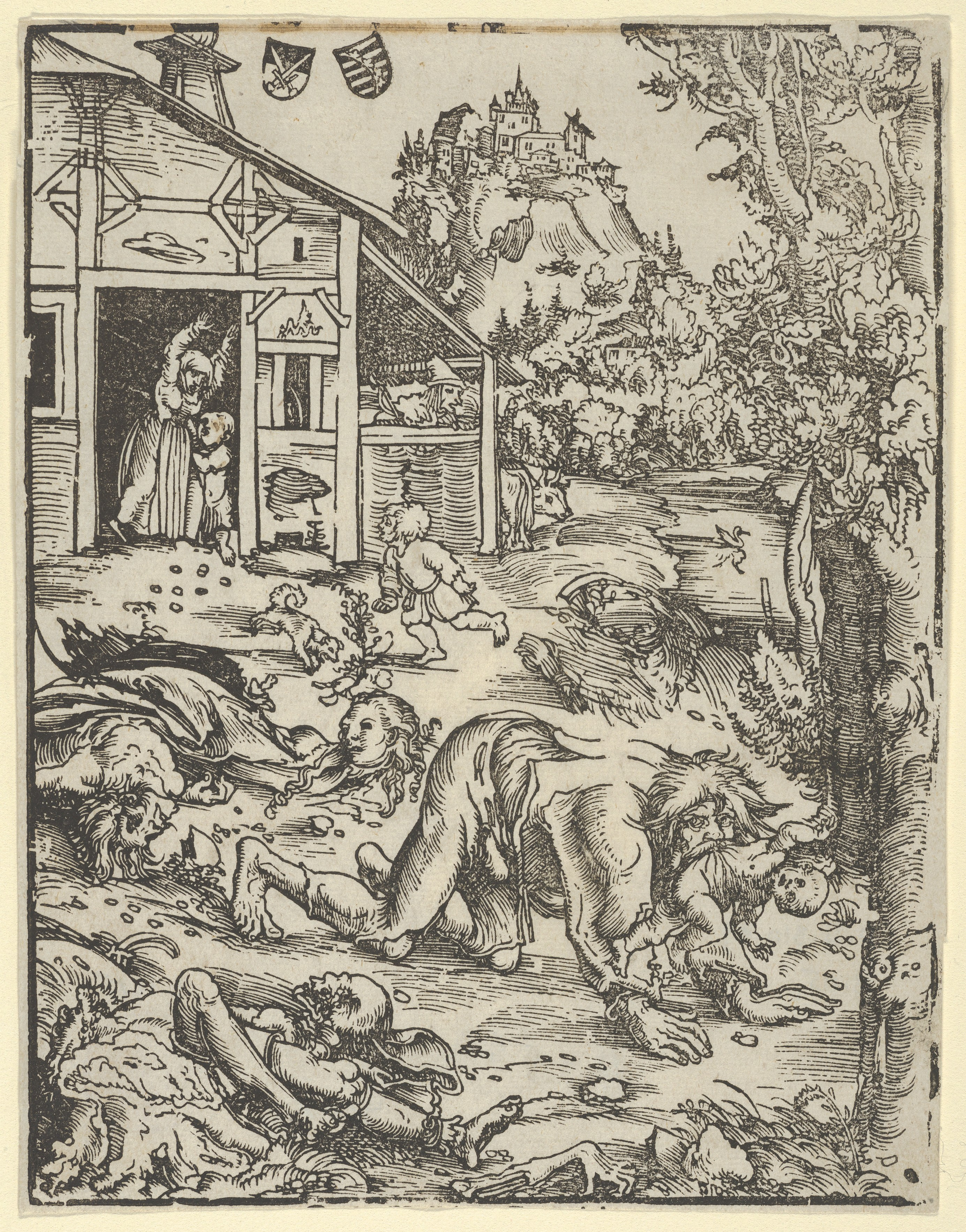
Now I love mystical characters, creatures, and fantasies. This story had the most action and thrill. I know when people think of werewolf's everyone screams "Twilight".  I have seen classic black and white movies that have the werewolf theme and that was my thought of what werewolf's would be in medieval times. I couldn't stand why the wife couldn't accept the fact that her husband was a werewolf. And when he ran off for quite sometime into the woods, she just decided to up and marry someone else. At that point she deserved to be bitten in the nose by her ex-husband. She should've stayed and helped him through his problem. See females today, when things get to tough or they don't like something that their "significant other" does they would just up leave. In the end at least he gets changed back into a human, but its still cool that he becomes a werewolf. He was about that life.


An Upgrade from Beowulf!

These lais were pretty fun to read, especially considering I read Norse Eddas and Sagas and Roman Lays. So instead of reading about the awful things men do to men, I can read about the awful things men do to women and women to women! And wolf-men to men and women. Yikes. At least before I was reading the old time-y version of 300...

Right from the start we get violence from Equitan which shows us that you shouldn't be evil lest evil be done to you. Good moral. Of course, this plan was doomed from the start (what do they think this guy is? seafood dinner?). And a victory bone in the tub should be done after the victim is killed, not that I would know. Because it seems less like karmic fate in the end and more "maniacal justice."

The correct way to prepare a boiled dinner.

At least no one died in Le Fresne. Still, ruining your neighbor's life just because you're jealous is a bit extreme. Especially considering your jealousy is over gross babies. The first act of this story essentially repeats the moral of our last story with less "Game of Thrones" worthy murders before moving on to the love story and concluding with the ever so familiar "long lost relative" story. Surprisingly, this ends happily! Must've gotten all the drama out of our systems with the intro.

Bisclavret threw me off a bit. When I think "Medieval werewolf," I think "rampaging monster" and not "dude who needs to keep his clothes on." Well, that's one modern stereotype that doesn't conform with past ideas. What about "sexy" werewolves from trashy romance novels? Well the wife didn't want anything to do with that furry mess. Then what were werewolves doing in those old stories?!

Pictured: Not our werewolf.

Even more surprising is how cool everyone was with it like, "Dude! A talking buppy!" Wasn't this supposed to be the time of superstitious fear mongering? And he attacks a knight at a party and everyone is privy that it's for revenge so they just forgive him! And he rips his wife's nose off and everyone thinks, "She had it coming maybe. Let's torture her to find out... Yeah, she had it coming." Way to go Medieval people... at least you stick to the fun stereotypes. In the end the wise man helps the knight assume his human form and everyone good lives happily ever after. How does the wise man know so much about werewolves anyway? I'm glad the story ended with the disclaimer this all actually happened for realsies. Cause a noseless lady having noseless kids? I would've thought all these stories were made up otherwise!

-Brian

Monday, January 26, 2015

Considering Capellanus

After reading a bit of Capellanus’ The Art of Courtly Love, I’ll have to admit that I am most certainly intrigued…


There wasn’t too much of the text that lost my interest and I was pleasantly surprised to see just how many thought-provoking similarities there were between Capellanus’ definition of love and our modern understanding of the term. Going into the reading this week with the expectation of seeing many stark differences was a great outlook to have as it allowed me to take better notice of the similarities that I honestly wasn’t expecting to find. For instance, the notion that “the easy attainment of love makes it of little value [while] difficulty of attainment makes it prized,” (Capellanus) is clearly something that we still witness / value in our society today. Especially speaking as a female, there have been countless times throughout my life that the term “playing hard to get” has come up in some sort of context or another (and I say especially speaking as a female because – at least from my perspective – this term is usually reserved for / said in reference to a woman). The notion that a lover’s value (specifically a woman’s) increases alongside the level of difficulty it takes to win their affection, a notion that is still very much alive and well today, comes directly from the concept of courtly love.


Indeed looking back at the readings for this week it becomes clear that the ideals of the medieval period still play an incredibly integral role in how our modern society constructs and stereotypes gender roles. For example, the classic 21st century cliché of a “whipped man” and a “controlling wife” are again direct products of courtly love. The ideal male lover of the medieval age was expected to serve his lady who, as Dr. Thompson points out, was often depicted as “cold and cruel.” This was honestly the part of the reading that stuck out to me the most, as I wasn’t previously aware that our modern concept / stereotype of a subservient or “whipped” male – and by association the “controlling” female - was a product of courtly love (now I know who to blame).


However while I wasn’t expecting to notice so many similarities at the start of my reading this week, I’m certainly glad that I did. These similarities unexpectedly drove me deep into thought and I spent a much longer time than I ever originally intended considering the ways in which our society still reflects the remnants of medieval courtly love as opposed to all the ways in which the two are so starkly different. At first I thought that the differences would be more intriguing; that their examination and consideration would be the best way for me to begin to develop an understanding of courtly love. That clearly wasn’t the case. I actually found it much harder to connect with or relate to the differences. To my surprise it was the similarities between Capellanus’ medieval definition of love and my modern understanding of the term that provided the most useful for consideration.