Out of all of these, I was most surprised by Equitan. I was expecting them to get their comeuppance somehow, because they both cheated and that violates the rules, but getting boiled alive was a little bit extreme I thought. I did do an image search to see if there were any period cartoons to describe this, as it was a real way that medieval prisoners were tortured, and oh! fun fact: Google actually auto-filled "medieval boiling torture" as a search parameter. I'm slightly disturbed. But what I thought was interesting was that this search directed me to this website (warning: if you're easily triggered by violence and/or torture devices, I would stay off this page), which stated that "torture was used almost exclusively for the crime of treason" - if you consider cheating on your spouse, who you married before the eyes of God and the government and the universe, a form of treason, then was their punishment deserved?
(Obviously, cheating is wrong unless you're both into that, but death is a little over-the-top. You shouldn't let your marital problems come to a boiling point.)

Knight on the left is like, "you're so going to hell, dude."
Le Fresne I found to be formulaic, but happy - I was actually more interested in the trope of the separated twins and the foundling child than I was in the actual plot of the story, because this is an archetype that's seen throughout the world. The fact that nobody died is a plus too. I was actually struck by the similarity between Le Fresne and a tale from the Arabian Nights, whose specific title I don't actually know, but is called The Story of the Speaking Bird at this website. In this tale, two sisters are jealous of the other, who is married to the Sultan. They steal each of her three children and replace it with an animal as soon as it's born, and tell the Sultan his wife has delivered a monster. The three children are raised happily by a gardener, ignorant of their heritage. Anyway, I won't spoil it for you, but it was just interesting to note.
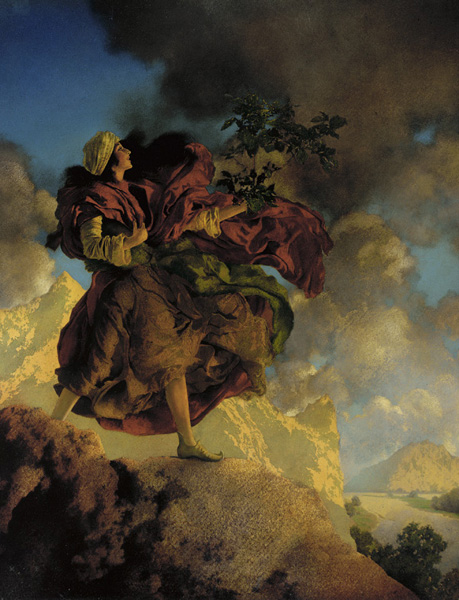
Princess Parizade Bringing Home the Singing Tree, Maxfield Parrish, 1906
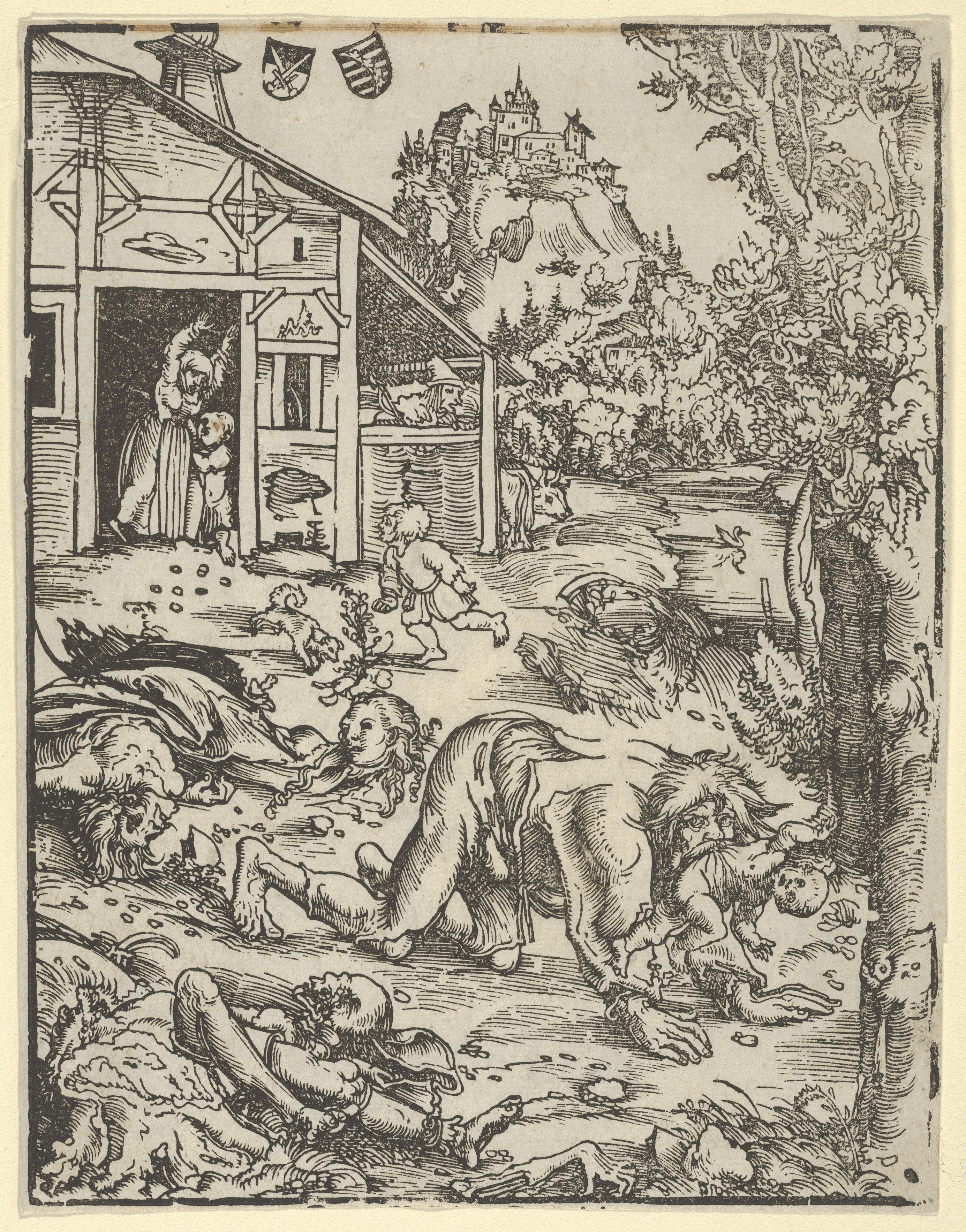
And lastly, there is Bisclavret. I liked Bisclavret, not only because I like werewolves, but because the lai was just... funny-ish? It was humorous, in a strange way, because Bisclavret was a different kind of werewolf than we expected. A werewolf here is more akin to "a man wearing a wolf's skin" than a separate supernatural species, kind of like Viking berserkers, who were called that because they wore bear pelts (the ones who wore wolf pelts were called ulfhednar), and changed their mentality but not their form. Here, like in Equitan, there is a form of marital treason at the hands of the wife - a story where Marie is not particularly kind to her own gender, which is interesting to note because she can sometimes vacillate between extremes when it comes to perception of women.
And to wrap this up, have a lyric video of Arthurian-mythological song about Mordred, and Morgan le Fay. Some of you might have heard it already but... (by the way, this artist specializes in Celtic music, and she is amazing.)
Heather Dale, "Mordred's Lullaby", Avalon or The Trial of Lancelot
Works Cited:
- McDonald, James. "Medieval Torture." Medieval Warfare. Castles and Manor Houses Inc, 11 Apr. 2012. Web. 02 Feb. 2015.
- Wikipedia - "Berserker", http://en.wikipedia.org/wiki/Berserker
- Wikipedia - http://en.wikipedia.org/wiki/File:Princess_Parizade_Bringing_Home_the_Singing_Tree.jpg
- "THE STORY OF THE SPEAKING BIRD." More Fairy Tales from the Arabian Nights. N.p., n.d. Web. 03 Feb. 2015.